Outdoor TVs: What to Know Before You Buy
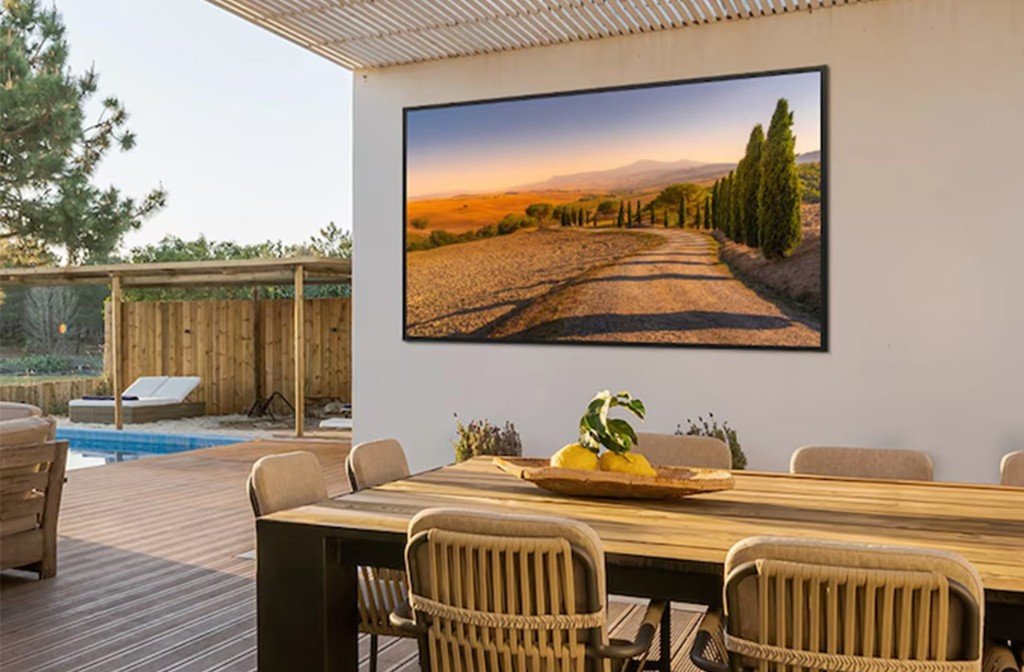
Watching sport in the garden, hosting an outdoor film night with friends, catching up on a box set on a warm summer evening — an outdoor TV makes all of this effortless. But "outdoor TV" isn't simply a regular TV placed outside. It's a different category of product entirely, engineered for conditions that would destroy a standard living room set within a few weeks.
This guide explains exactly what separates an outdoor TV from an indoor one, what specifications to prioritise for a UK garden, and how to plan your setup so it works year-round — not just on the rare sunny days.
In this article
Indoor vs outdoor TVs: the real differences
On the surface, outdoor TVs look similar to their indoor counterparts. The engineering inside, however, is fundamentally different. Here's what separates a proper outdoor TV from a regular set.
| Feature | Indoor TV | Outdoor TV |
|---|---|---|
| Brightness | 350–800 nits | 1,000–2,500 nits |
| Weatherproofing | None — IP unrated | IP55 or IP56 as standard |
| Temperature range | 15–35°C (typical use) | −20°C to +55°C with internal heaters |
| Anti-glare coating | Basic matt or glossy panel | Specialist anti-reflective treated screen |
| Remote | Standard | Often waterproof / backlit |
| Ports | Open rear | Sealed, weatherproof entries |
Brightness and the British sun
Even on a typically overcast British day, ambient light levels outside are far higher than any living room. A standard TV rated at 500 nits — which looks perfectly bright indoors — will appear grey and washed out in a garden environment. The image essentially disappears into the background.
Outdoor TVs compensate with vastly higher peak brightness. Entry-level outdoor models start at around 1,000 nits. Premium models targeting south-facing, fully sun-exposed positions reach 2,000–2,500 nits, with advanced anti-glare coatings that scatter incoming light before it can interfere with the image.
IP ratings and weatherproofing
The IP (Ingress Protection) rating tells you how well a device resists dust and moisture. For outdoor TVs, the two digits that follow "IP" each describe a different kind of protection: the first digit covers solid objects and dust; the second covers water.
IP55
Dust-protected and resistant to water jets from any direction. Suitable for most UK gardens, covered patios and pergolas.
IP56
Dust-protected and resistant to powerful water jets. Can withstand heavy rain, pressure washing nearby, and being fully exposed to the elements.
Internal climate control
Proper outdoor TVs include built-in heaters and cooling fans to maintain safe operating temperatures from winter frosts to summer heatwaves.
Beyond the IP rating, look for sealed port covers — not just weatherproofed ports, but physical covers that close off unused HDMI and USB connections when not in use. This prevents slow corrosion that can develop over months even on well-sealed sets.
Where to position your outdoor TV
Placement isn't just a practicality — it's the single biggest factor in how good the picture looks and how long the set lasts. Before mounting anything, spend a day observing how the sun moves across your garden. A spot that's comfortably shaded at 10am can become a glare-trap by mid-afternoon as the sun tracks lower in the sky.
Best positions for UK gardens
North-facing wall: The best option for picture quality. The sun stays behind the screen, meaning the anti-glare coating works at maximum efficiency and you're not competing with direct sunlight at any time of day.
Under a pergola or awning: Creates a natural shadow box effect that enhances perceived contrast. Even partial overhead cover makes a significant difference to the viewing experience on bright days.
South-facing with shade structure: Works well with a high-brightness (2,000+ nit) outdoor TV. A retractable awning gives you the flexibility to block the sun when needed without a permanent structure.
Signal, connectivity and audio
Most modern outdoor TVs connect via Wi-Fi and include built-in streaming apps, which eliminates the need for any cables beyond the power supply. If you want a Freeview aerial connection, use double-shielded coaxial cable rated for outdoor use — standard indoor aerial cables degrade quickly when exposed to UV and moisture.
For audio, built-in outdoor TV speakers are generally louder and more weather-resistant than indoor equivalents, but they can't compete with the natural reverb of an open garden space. An outdoor-rated soundbar, or even a pair of weatherproof garden speakers connected to a small amplifier, transforms the experience dramatically and is well worth the additional cost.
Practical tips for year-round use
- Use a purpose-made outdoor cover whenever the TV is switched off for more than a day.
- Check connections annually — clean port contacts and inspect cable entry points for signs of moisture ingress.
- Avoid hard-wired aerial connections running through the ground — these are susceptible to waterlogging and can cause signal problems that are difficult to diagnose.
- For gardens with heavy foliage, leaf debris accumulation around the TV's ventilation can impair cooling over time. A quick check each season is sufficient maintenance.
- Consider smart home integration — most current outdoor TVs support Amazon Alexa and Google Assistant, letting you control the set from indoors without needing the remote when it's raining.